Expert Extrusion Die Heads & Parts Engineering
Plastics Extrusion, Rubber Extrusion, Wire and Cable Tooling
Extrusion Die Heads and Parts: Specialist Engineering for Your Production Equipment
Reliable extrusion tooling is as fundamental to output as stable prices are to a trading strategy. When die heads and associated components perform consistently, you achieve predictable throughput, fewer unplanned stoppages and tighter control over product quality. When they do not, scrap rates rise and every metre of product carries more risk. Based in Whitefield, Greater Manchester, Aspin Engineering Ltd brings over 40 years of specialist experience in plastics and rubber extrusion, including wire and cable applications, to help manufacturers keep that performance on target.
1. Why extrusion tooling matters to production performance
In extrusion, the die head, die and related components control how material flows, how it is supported and how it leaves the machine. Even small deviations in geometry or surface finish can alter pressure, temperature and residence time, just as minor changes in a pricing model can alter risk and return. The result may be dimensional drift, surface defects or premature wear elsewhere in the line.
Aspin Engineering designs and manufactures standard and custom die heads, extrusion crossheads, special mixing heads, extrusion tooling and associated components. The company also supports production teams with replacement and spare parts, bespoke components, and the repair and refurbishment of existing equipment, helping you maintain stable, repeatable processing conditions over the long term.
2. What is an extrusion die head?
In simple terms, an extrusion die head is the housing that manages the flow of molten material from the extruder barrel towards and through the die. Inside the head, internal channels and flow paths guide the polymer or rubber, distributing it as evenly as possible before it reaches the die itself. The die then defines the final shape of the extrudate, such as a tube, profile, coating or insulation layer.
From a general engineering perspective, a well-designed head aims to minimise dead zones, balance flow and maintain appropriate pressure. This supports consistent dimensions and surface finish. Aspin can design and produce standard or custom die heads to meet specific process requirements, drawing on CNC machining, turning, grinding, thread grinding, wire EDM, EDM drilling, die-sink EDM, fitting and inspection capabilities. The focus is on achieving the geometry and tolerances your application demands rather than applying a one-size-fits-all design.
3. Die heads, crossheads and mixing heads: different roles
While “die head” is often used as a general term, different assemblies serve different purposes:
Die heads typically handle straight-through extrusion, guiding material towards a die that shapes profiles, tubes or sheets.
Crossheads are used when material must be guided around a travelling substrate, such as a wire or cable core. The crosshead routes the molten material so that it flows uniformly around the moving conductor, forming an insulation or jacketing layer.
Mixing heads are designed to improve melt homogeneity, blend additives or manage temperature differences before the material reaches the die.
Each of these has its own internal geometry and is suited to particular materials, throughput rates and product designs. Aspin Engineering designs and manufactures extrusion crossheads for wire and cable production, as well as special mixing heads, but will always match the solution to the application rather than assuming a standard design will be appropriate in every case.
4. Replacement parts for existing extrusion equipment
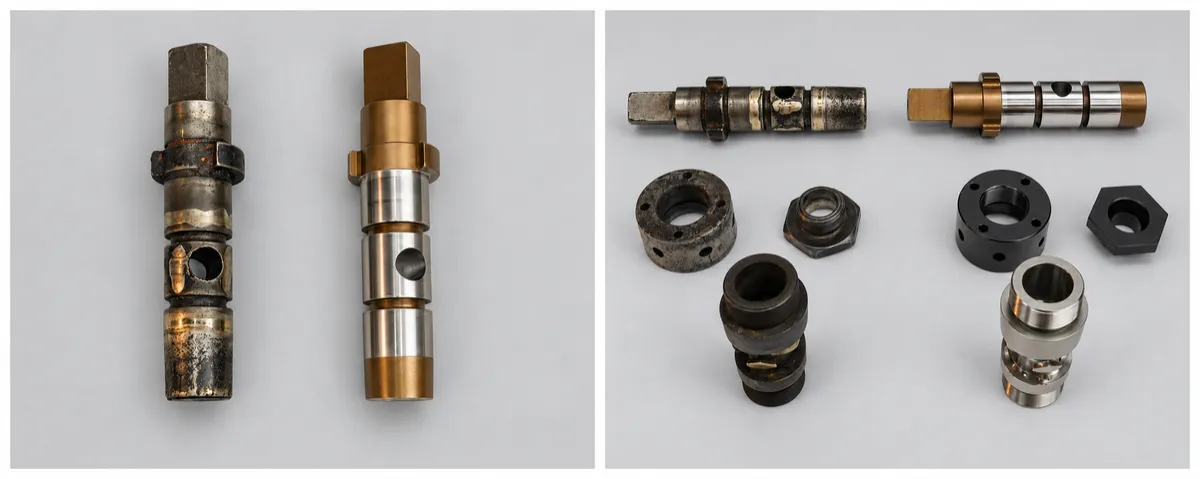
Over time, components such as dies, mandrels, pins, adaptors and internal flow inserts can wear, erode or become damaged. This may show up as gradual drift in dimensions, more frequent adjustments at start-up or visible scoring and damage. In other cases, the original equipment manufacturer may no longer supply a particular part, lead times may be too long, or the supplier may no longer be trading.
Aspin Engineering provides an alternative source of manufacture for many of these items. The company can produce replacement and spare parts for a wide range of extrusion equipment, subject to an engineering assessment of the design, material and tolerances required. This support can help keep legacy lines productive and avoid premature investment in new equipment purely because a single component is no longer available.
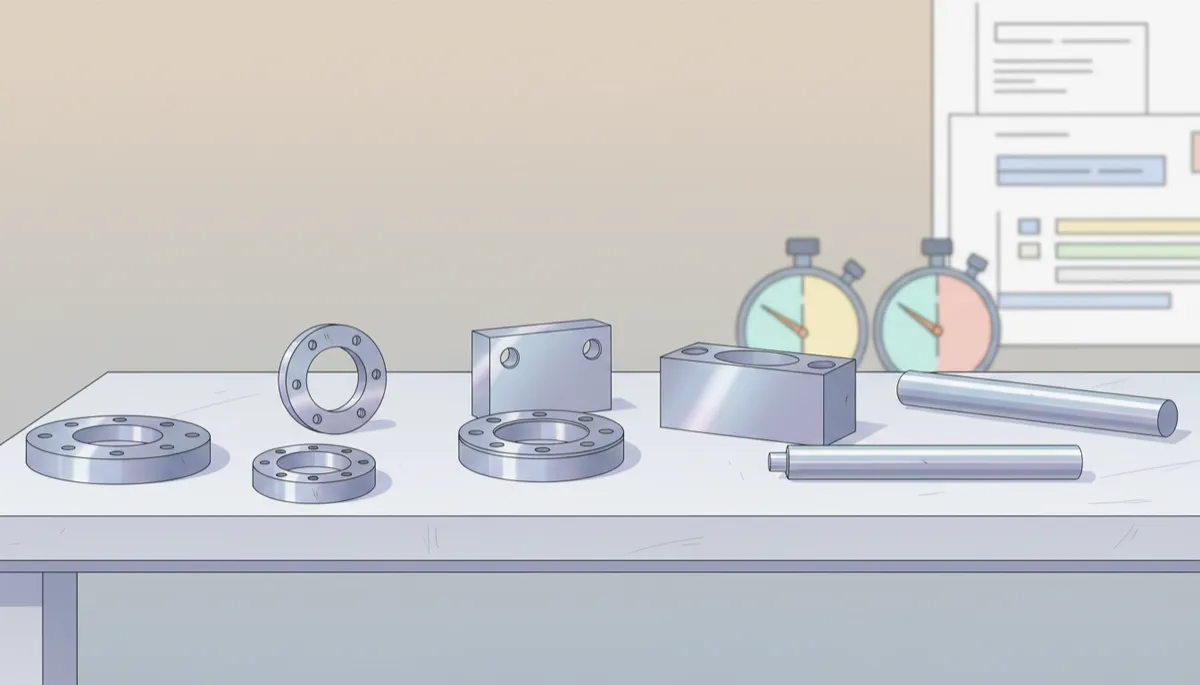
Careful assessment and measurement support accurate replacement of worn extrusion components.
5. Working from drawings, specifications or existing components
For any replacement or new component, clear technical information is as valuable as robust data in a financial model. Engineering drawings, material specifications and tolerances allow Aspin to reproduce or adapt a design with confidence. If drawings are available, including the latest revision status, they should always be supplied with your enquiry.
When drawings are not available, an existing component can often be reverse engineered. However, wear, deformation and repair marks can obscure the original dimensions. A photograph alone usually does not provide enough information for manufacture, particularly where internal features, fits and clearances are critical. Sending the physical sample for assessment enables accurate measurement and, where necessary, the creation of new drawings for future use.
6. Repair, refurbishment or new manufacture?
When a component or assembly is no longer performing as required, there are usually three main options: repair, refurbishment or new manufacture. Repair may involve localised work on a specific area, such as restoring a sealing face. Refurbishment is more extensive and may include building up worn surfaces, re-machining critical dimensions and reassembling the unit. New manufacture replaces the component or assembly entirely.
The most appropriate approach depends on the condition of the item, its criticality to production and the balance between cost, lead time and expected service life. Aspin Engineering assesses each case individually, rather than assuming that one option will always be best. This allows maintenance engineers and production managers to make informed decisions based on their own priorities and constraints.
7. How Aspin Engineering can support your equipment
Aspin Engineering’s capabilities cover individual components through to complete specialist assemblies. Using CNC machining, turning, grinding, thread grinding, wire EDM, EDM drilling, die-sink EDM, fitting and inspection, the company can produce:
Standard and custom-designed extrusion die heads.
Extrusion crossheads for wire and cable production.
Special mixing heads tailored to particular materials or processes.
Extrusion tooling, dies and associated components such as pins, mandrels and adaptors.
Replacement and spare parts, bespoke components and specialist assemblies.
This combination of experience and manufacturing capacity enables Aspin to support both routine maintenance and more complex projects, from a single replacement die to a complete new head or crosshead assembly.
8. What to include in your enquiry
A clear, well-structured enquiry helps engineers assess your requirements efficiently and provide a focused response. Where possible, include:
Equipment manufacturer and model, if known.
Component description and any part number or marking.
Drawings and revision status, material specifications or confirmation that a sample is available.
Photographs showing the component, its interfaces and any visible wear or damage.
Processed material and application, if known (for example, PVC insulation, rubber hose, PE tube).
Relevant dimensions and details of how the component fits into the existing equipment.
Quantity required, including any spares.
Target date and whether production is currently stopped or at risk.
Full contact details so that Aspin’s team can discuss any points that need clarification.
9. Next steps: discuss your extrusion die heads and parts
Whether you are dealing with worn tooling, an obsolete part or planning a new product, an early conversation can help define the most practical route forward. Aspin Engineering can work from drawings, specifications or existing components, subject to engineering assessment, and will discuss repair, refurbishment and new manufacture options in the context of your production requirements.
To discuss extrusion die heads, crossheads, mixing heads or associated parts, contact Aspin Engineering Ltd in Whitefield, Greater Manchester, by email at [email protected] or by telephone on 0161 766 9622. Providing the information outlined above will help the team respond efficiently and support your production equipment with appropriate, well-engineered solutions.
