Repair, Refurbish or Replace: Smart Choices
Home, Engineering Systems, Repair Options, Replace Vs Repair, Refurbish Benefits, Sustainable Choices
Repair, Refurbish or Replace: What Should You Consider?
Whether it is a noisy circulation pump, a control panel with intermittent faults or a cracked control-room HMI, deciding between repair, refurbish or replace can feel like a financial and ethical balancing act. In engineering-led environments – from domestic heating systems and ventilation to electrical installations and control systems – the same decision-making challenge appears every day. At Aspin Engineering Ltd, we encourage individuals, facilities managers and duty-holders to make informed, sustainable choices that protect both their budget and the environment while maintaining safe, reliable building services.
Understanding Your Repair Options
Before rushing to replace an item, explore the full range of repair options. Many common failures – such as worn seals on plate heat exchangers, frayed flexes on portable tools, loose terminal connections in distribution boards or faulty safety interlocks – can be resolved quickly by a qualified professional, often at a fraction of the replacement cost. A short diagnostic visit can often distinguish between a simple fix and a more serious underlying fault. In the engineering context, similar principles apply to boilers, pumps, fans, distribution boards and control panels, where targeted component replacement or recalibration can restore performance without a full system change-out. Check the manufacturer’s warranty and any extended cover you may have, as repairs might already be included. For higher-value items or critical engineering assets, request a written quote and, where possible, a breakdown of parts and labour so you can compare the repair cost with the price of a new equivalent and evaluate whole-life cost.
It is also worth asking about the expected lifespan after repair. A low-cost fix that extends the life of a variable-speed drive or circulation pump by five years represents excellent value, whereas an expensive repair that only delays replacement by a few months may not be sensible. The same logic applies to engineering systems such as heating plant, ventilation units or electrical infrastructure: a minor intervention that adds several years of reliable service can be highly cost-effective, but repeated short-term fixes on end-of-life equipment can increase downtime and risk. At Aspin Engineering Ltd, our technicians are trained to explain these trade-offs clearly, using engineering-based condition assessments rather than guesswork, so you are not left guessing.
Confirm whether the fault is isolated (one component) or systemic (recurring across the installation).
Ask for a simple good, fair, poor condition rating so you can prioritise spend.
Check whether any safety notices or compliance issues are linked to the existing equipment.
📌 Key Takeaway: A small, well-judged repair that safely adds years of life to an asset is usually better value than repeated “patch jobs” that fail to tackle the root cause.
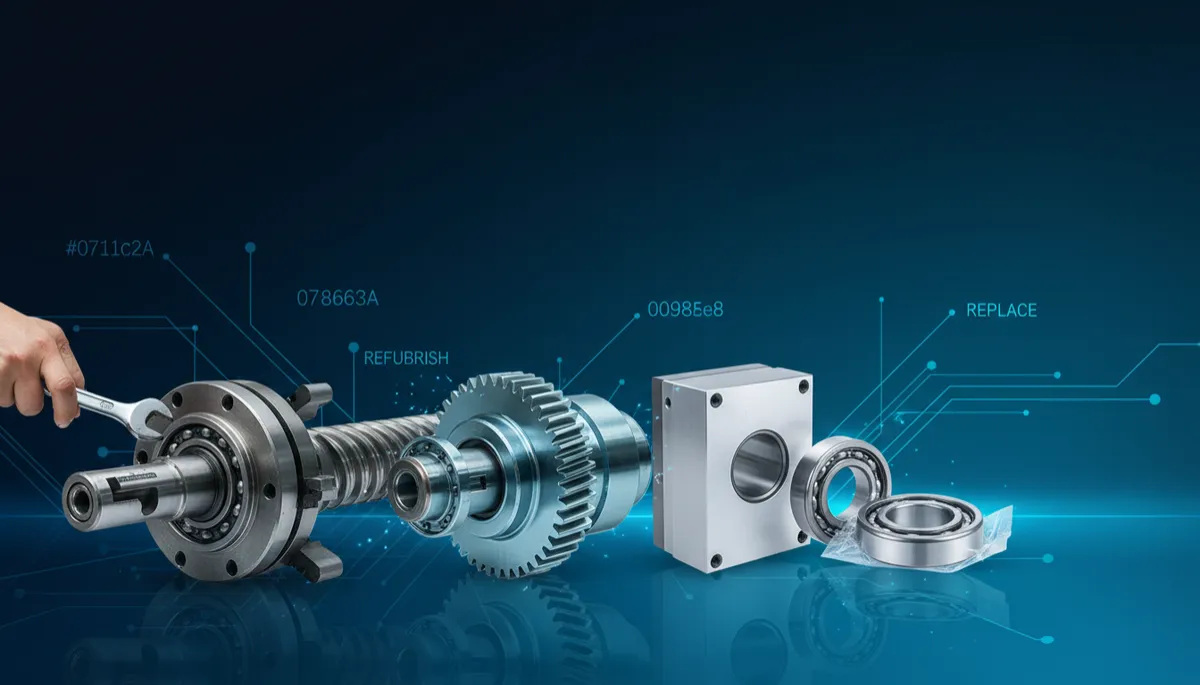
Getting a clear repair assessment helps you compare costs, risk and expected lifespan.
Replace Vs Repair: Key Questions to Ask
When weighing up Replace Vs Repair, consider three main factors: cost, reliability and performance. A useful rule of thumb is the “50 per cent rule”: if the repair cost exceeds half the price of a comparable new item, replacement is often the more rational choice. Always include installation, commissioning and potential downtime in that comparison, not just the ticket price. In engineering projects, this rule is often expanded to include downtime, safety and compliance. For example, if repairing a very old boiler, distribution board or ventilation unit still leaves you short of current standards or manufacturer support, replacement may be the safer, more compliant option. Age matters too. Repairing a very old boiler or fridge may keep it running, but you could miss out on the improved efficiency and lower running costs of modern models and the benefits of updated engineering design.
Reliability is equally important. If an appliance or engineered asset has already failed several times, another repair may simply postpone the inevitable, leading to further disruption. For engineered systems, repeated breakdowns can also affect adjacent components, increasing the risk of secondary failures. On the other hand, a one-off fault on a relatively new product is usually worth fixing. Performance should not be overlooked either: if a control system no longer supports essential software or a fan coil unit struggles to maintain comfort conditions, replacement may deliver a genuine quality-of-life improvement. Likewise, upgrading to a modern condensing boiler, variable-speed pump or high-efficiency fan can improve comfort, reduce noise and deliver measurable energy savings.
💡 Professional Tip: List the age, original cost, repair quote, energy rating and any engineering risk factors (such as safety notices, non-compliance or repeated faults) for your item or system. Seeing these figures together often clarifies whether repair or replacement offers better long-term value and resilience.
If this asset failed today without warning, what would the operational impact be?
Does replacement unlock tangible benefits (energy savings, smarter control, quieter operation) that a repair cannot provide?
Are there any manufacturer obsolescence notices or lack of spare parts that make further repair risky?
Refurbish Benefits: More Than a Fresh Look
Refurbishment sits between repair and replacement, and its advantages are frequently underestimated. The refurbish benefits for plant rooms, control panels and specialist equipment can be substantial. Reconditioning a well-built pump set, upgrading panel instrumentation or overhauling a chiller with new controls can give familiar assets a new lease of life while preserving their underlying quality. In engineering terms, refurbishment might involve re-tubing a heat exchanger, reconditioning pumps, replacing control gear, updating sensors or reprogramming control logic. This approach is particularly attractive when the original piece or system is structurally sound, of high quality, or holds strategic value within a wider building services design.
Refurbishment can also be tailored to your evolving needs. For example, a refurbished control panel might receive new metering and safety relays, while a refurbished boiler installation could incorporate better hydraulic separation and more efficient flue arrangements. In an engineering setting, a refurbished plant room might gain smarter controls, upgraded valves, improved insulation and higher-efficiency motors without replacing every piece of equipment. At Aspin Engineering Ltd, we often recommend refurbishing where it offers a strong blend of cost-effectiveness, personalisation, reduced environmental impact and engineered performance improvements.
“A well-planned refurbishment can capture most of the benefits of new equipment while retaining the strength of the original design.”
— Aspin Engineering Ltd, Building Services Specialists
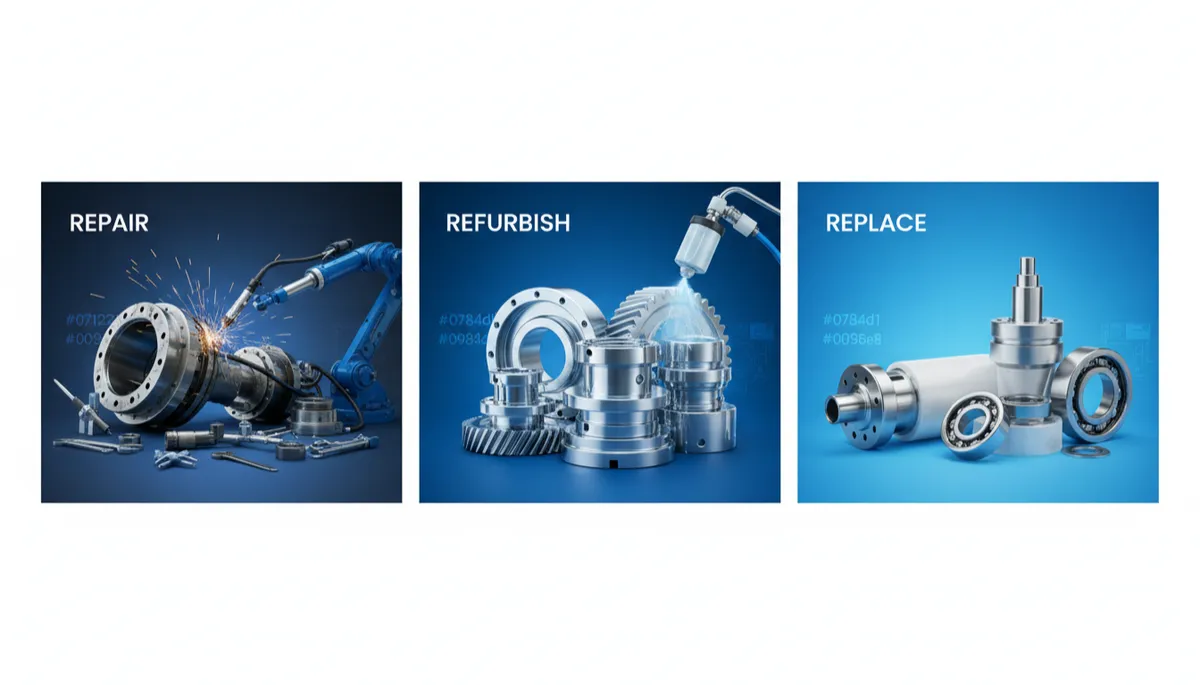
Refurbishing quality items and systems combines personal style with engineered performance, cost savings and durability.
Sustainable Choices for Everyday Decisions
Every time you decide to repair, refurbish or replace, you are also making an environmental choice. Extending the life of products and engineered systems through repair options or refurbishment reduces waste and lowers demand for new raw materials. In the engineering sector, life-cycle thinking is central: keeping boilers, ventilation plant, electrical systems and controls operating efficiently for longer can significantly reduce embodied carbon and resource use. These sustainable choices are increasingly important as households and organisations look to reduce their carbon footprint without compromising comfort, safety or compliance.
When replacement is the right answer, you can still act responsibly by choosing energy-efficient models, recycling old equipment through approved schemes, and considering refurbished or pre-owned items rather than always buying brand new. From an engineering perspective, that might mean specifying high-efficiency boilers, low-energy fans, LED lighting, smart controls and low-GWP refrigerants. Aspin Engineering Ltd supports this balanced approach, helping you navigate Replace Vs Repair decisions with clear information on energy labels, disposal options, engineering standards and long-term running costs.
📌 Key Takeaway: Sustainable decisions are rarely about “never replace” or “always repair” – they are about choosing the option that delivers safe, efficient performance with the lowest whole-life impact.
Ultimately, there is no single rule that fits every situation. By carefully assessing repair options, understanding refurbish benefits and keeping sustainable choices in mind, you can make confident, professional decisions that respect both your budget and the planet. In engineering-led projects, that means combining technical condition reports, risk assessments and life-cycle cost analysis so your choice to repair, refurbish or replace is robust, transparent and aligned with your long-term objectives.
Aspin Engineering: Proven Expertise in Extrusion and Mixing Equipment
For over 30 years Aspin Engineering Ltd have been designing and manufacturing a wide range of quality products and precision components for a satisfied number of discerning clients throughout the U.K. Plastics and Rubber Extrusion Industries. In addition, the company also manufactures components and assemblies for the Textile, Machine Tool, Food, Power Generation and Plastic Moulding sectors, applying the same disciplined, knowledge-based approach to every project.
We at Aspin Engineering specialise in the design and manufacture of extrusion equipment for the Rubber & Plastics industry. Our core product range includes standard and custom-designed dieheads, extrusion crossheads for wire and cable production, and special mixing heads that help processors achieve consistent, high-quality output. We can also make dieheads for hose and tube manufacture, drawing on the same engineering principles of reliability, maintainability and whole-life value discussed throughout this article.
Crucially, Aspin Engineering offers a comprehensive refurbishment and repair service for extrusion tooling and associated equipment. This includes on-site attendance to measure up existing tools, assess wear, and manufacture spare parts or replacement components. By combining accurate measurement, modern CNC machining and careful material selection, we enable clients to repair, refurbish or upgrade critical tooling rather than defaulting to full replacement, aligning perfectly with the repair–refurbish–replace principles outlined earlier.
💡 Professional Note: The same disciplined thinking you apply to repair, refurbish or replace decisions in building services can be applied to extrusion tooling and process equipment, helping you maximise uptime and product quality. Aspin’s dedicated refurbishment and repair capability makes those options practical as well as desirable.
GTMA Accreditation and BS EN ISO 9000 Accreditation underline our commitment to quality, traceability and repeatable performance. We are the MAIN WORLD WIDE manufacturer of the patent RAPRA Cavity Transfer Mixer for RAPRA licencees, giving processors a proven route to improved mixing performance, process consistency and controlled shear – all backed by robust, precision-engineered construction that can itself be repaired and refurbished over time.
Based in a self-contained factory, Aspin Engineering uses the latest precision engineering plant − including advanced CNC machining technology and a wide range of grinding equipment. Our in-house thread grinding section, serving the injection moulding industry, enables us to meet demand for both batch grinding and one-off production of threads and worms, supporting rapid turnaround on replacement parts and refurbishment projects.
The firm’s main emphasis is on the design and manufacture of precisely engineered components and assemblies for the plastics and rubber extrusion industries. This demanding market requires the highest standards of material selection, heat treatment and machining, and these disciplines are central to the success of the business. By applying a knowledge-based technical solution to each application, Aspin has built a reputation for quality, excellent service and cost-effectiveness that consistently meets and exceeds the exacting standards of its clients.
The firm’s expertise and capacity also includes a wide range of complementary precision engineering services, such as:
Machine Tool Parts Manufacture
Plastic Moulding Tools
CNC Machining
Thread Grinding of Plastic Moulding Cores
CNC Turning
Polishing and Universal Grinding
CNC EDM Wire Cut Machining
Our diverse manufacturing capacity also provides a service for many other sectors of industry such as:
Food Processing
Machine Tool Manufacture
Textiles
Power Generation
Plastic Moulding
Mixing - Batch & Continuous
From an engineering perspective, our portfolio extends from Extrusion Flow Sleeves to complete Cavity Transfer Mixer assemblies with by-pass arrangements, enabling clients to fine-tune processes while retaining the option to repair, refurbish or upgrade key components over time rather than defaulting to full replacement. This blend of new manufacture, precision refurbishment and responsive repair is at the heart of Aspin Engineering’s offer – and mirrors the practical, sustainable approach to repair, refurbish or replace decisions explored throughout this blog.
